
How to Find the Best Hairstyle for Your Face Shape
Learn how to identify your face shape and use it as a starting point for choosing flattering haircuts, fringes and styles that suit your features.

To find a hairstyle that suits your face shape, first compare your forehead, cheekbones, jawline and face length, then use those proportions to explore cuts and styling options. Treat the result as a starting point, not a rule: hair texture, personal taste, upkeep and the way a style makes you feel matter just as much.
A useful approach is to identify a few features rather than chase a perfect category. For example, you might have a softly rounded jaw and a longer face, or prominent cheekbones with a narrower forehead. Those details can help you decide where to add movement, volume or a framing fringe.
The ideas below explain how to assess your shape, compare haircut options and judge inspiration photos. Bring a couple of reference images to a stylist, and discuss how each look could work with your natural texture and daily routine.
- Use face shape as a starting point, not a strict rule.
- Compare your forehead, cheekbones, jawline and face length in a clear, straight-on view.
- Explore cuts and fringes for their visual effects, then factor in texture and upkeep.
- Bring reference photos and ask a stylist how to adapt the details to your hair.
Why face shape can help guide a hairstyle choice
A useful starting point
Face shape can help you notice how a haircut changes the balance of your features, especially around the forehead, cheeks and jaw. A chin-length bob, for instance, draws attention to the jaw, while longer layers can add movement beside the cheeks. These are visual effects to consider, not rules about what you should wear.
- Mistake: treating a face-shape label as a strict rule; better approach: use it to generate options, then choose what you enjoy.
- Mistake: overlooking texture; better approach: ask how the cut will sit when your hair is styled as usual.
- Mistake: copying a photo without context; better approach: compare the model’s length, parting and styling with your own.
Hair also frames the face differently depending on its texture, density and styling. A fringe that sits lightly on straight hair may look fuller on curls, while a short crop can expose more of the forehead and cheekbones. Think about the result you want before treating any shape guide as a prescription.
Personal preference should have the final say. If you love a style often suggested for a different face shape, ask a stylist how to adapt its length, parting or layers to your features. A small change can preserve the look you like while making it easier to wear with your hair’s natural behavior.
Balance without rigid rules
Guides often describe certain cuts as balancing particular proportions, but balance is a matter of visual effect rather than correction. Side-swept layers can soften a strong outline, while a blunt fringe can make the forehead appear shorter. You may prefer either effect, or decide that your features need no adjustment at all.
The same haircut can create different impressions when its parting, volume or finish changes. A deep side part shifts attention across the face, while volume at the crown can make the overall silhouette seem longer. Ask which details matter most to you, then use shape advice to test those possibilities.
There is no single best haircut for every person with the same face shape. Two people with oval faces, for example, may have different hairlines, curl patterns and maintenance preferences. Use the category to narrow your first round of ideas, then judge each cut against your actual hair and day-to-day habits.
How to identify your face shape
Compare your main proportions
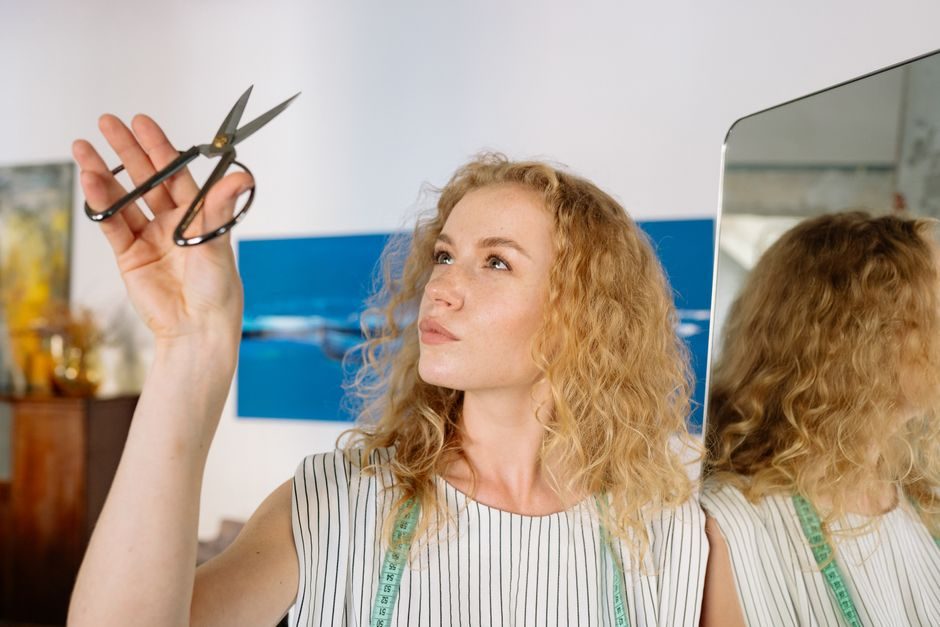
Look at your face straight on in a mirror, with your hair pulled away from your hairline, and compare its length with its width. Notice whether your forehead, cheekbones or jaw seem widest, and whether your jawline looks rounded, angular or pointed. These broad observations are more useful than trying to match every detail to a diagram.
- ☐ Move hair away from the hairline and jaw.
- ☐ Use a straight-on mirror view or a photo taken from farther away.
- ☐ Compare the widest area with your overall face length.
- ☐ Note whether your jawline is rounded, angular or tapered.
You can use a flexible tape measure or a clear front-facing photo to compare the forehead, cheekbones, jaw and full face length. Keep the tape comfortable and measure consistently from side to side where appropriate. If measuring feels awkward, simply note which areas appear widest and whether your face looks longer than it is wide.
Check your impression in more than one setting before settling on a label. A close-up selfie can distort proportions, especially around the nose and edges of the face, while a mirror offers a more natural view. Step back from the mirror or use a photo taken from a little farther away to compare your features.
- Pull hair away from the face.
- Look straight ahead in even light.
- Compare forehead, cheekbones and jaw width.
- Consider face length and jaw outline.
Recognize common shape patterns
An oval face is usually longer than it is wide, with a gently rounded jaw and no especially broad area. Round faces tend to have similar width and length with softer curves, while square faces often have a broader forehead and a more defined jaw. These descriptions are reference points, not precise measurements.
A heart-shaped face commonly has a wider forehead or cheek area that narrows toward the chin. A diamond shape is often widest at the cheekbones, with a narrower forehead and jaw. Some faces sit between these categories, so describe the features you see rather than forcing a single label.
If you cannot decide, choose two shapes that seem close and compare the features they share. You might describe your face as long with a rounded jaw, for example, instead of committing to an oval label. That description gives a stylist more useful information than a category alone.
Haircut ideas to explore for each face shape
Match shapes with options
Use common face-shape suggestions to build a shortlist, then adjust each cut for your hair and preferences. Long layers can add movement around a longer face, while a side-swept fringe can create a diagonal line across the forehead. For a round face, a longer bob or off-center part may add definition without hiding the cheeks.
If your face is square, consider soft layers or a textured fringe that breaks up a strong outline; if it is heart-shaped, chin-length layers can add visual fullness near the jaw. Diamond-shaped faces may suit styles that bring softness around the forehead and chin. These are ideas to try, not guarantees of a flattering result.
An oval face can often accommodate a wide range of lengths, so let texture and maintenance guide the choice. A short crop, blunt bob or long layers may all be worth discussing if they appeal to you. Ask a stylist to explain what the cut will emphasize and how it will behave between appointments.
| Face shape | Ideas to explore | Detail to consider |
|---|---|---|
| Oval | Short crop or long layers | Let texture guide the length |
| Round | Longer bob or off-center part | Consider added definition |
| Square | Soft layers or textured fringe | Break up a strong outline |
| Heart or diamond | Chin-length layers or face framing | Consider fullness near the jaw |
Choose fringe and layering
Fringe can change the apparent proportions of a face without changing the overall haircut length. Curtain bangs open at the center and frame the sides, while a full fringe creates a stronger horizontal line across the forehead. Consider how much styling each option needs and whether your hair naturally falls in the direction required.
Layer placement also affects the outline. Layers starting near the cheekbones can highlight that area, while pieces that begin around the jaw can soften or accentuate its shape, depending on their fullness and finish. Ask to see where the shortest layers would sit before committing, especially if you prefer to tie your hair back.
Use a consultation to discuss a realistic version of your inspiration cut. Explain how much time you usually spend styling and whether you air-dry, diffuse or blow-dry your hair. A stylist can suggest a fringe length or layering pattern that keeps the look recognizable while working with your texture and routine.
When judging a hairstyle photo, look beyond the person’s face shape and check the hair’s texture, density, length and styling.
How to judge hairstyle inspiration online

Read beyond the face shape
When judging a hairstyle photo, look beyond the person’s face shape and check the hair’s texture, density, length and styling. A smooth, polished bob may rely on a blow-dry that differs from your usual routine, while a curly cut can depend on the curl pattern and how it is shaped. Compare the hair details, not just the silhouette.
Lighting, camera angle and pose can alter how a cut appears in a picture. A side view shows layering and length more clearly than a tightly cropped front-facing image, while a neutral expression makes the outline easier to assess. Save examples from several angles when possible, and note which specific details appeal to you.
For stylists publishing useful online hairstyle guides, Seo Services may help readers discover clear, practical content about cuts and face shapes. As a reader, focus on whether an article explains the hair texture, styling method and maintenance behind its photos. Those details make inspiration more actionable than a shape label or an attractive image alone.
Turn references into a plan
Bring a small collection of reference images and identify the detail you want from each one. You might like the fringe in one photo, the length in another and the soft finish in a third. Naming those features helps your stylist interpret your taste without assuming you want an exact copy.
Ask what the style would require on your hair, including daily styling, products and upkeep between cuts. If a reference has a different texture or density, ask which parts can transfer and which may need adjustment. A good conversation can turn an appealing image into a cut that feels practical rather than disappointing.
Before agreeing to a major change, discuss the shortest length, fringe shape and amount of layering you are comfortable with. You can also ask for a gradual approach, such as trying face-framing layers before committing to a full fringe. Clear boundaries give the stylist room to adapt the idea while protecting your preferences.
Choosing a salon and comparing stylist portfolios
Look For Relevant Experience
Choose a stylist whose portfolio includes cuts with a similar texture, density, and styling routine to yours. A polished photo can show the finish, but several examples reveal whether the stylist adapts a shape across different clients. Look for work that feels wearable, not only dramatic, and notice whether the hair appears styled in a way you could maintain.
Before booking, check what the consultation covers and whether you can discuss your daily routine, preferred length, and styling skills. Bring a few reference images that show details you like, such as a fringe or layered ends, rather than asking for an exact copy. A good stylist can explain what may need adjusting for your hair.
Salon professionals seeking local clients may find Local Seo Services relevant when working to make their portfolios easier to discover in local searches. For your own appointment, prioritize evidence of clear communication and consistent results over a salon’s online popularity. If the portfolio lacks examples like your hair, ask whether the stylist can share relevant work before you commit.
- Compare similar hair textures.
- Check several examples, not one image.
- Ask how the cut is maintained.
- Bring references with specific details.
Ask Before You Book
Use the consultation to find out how the stylist will translate your preferences into a cut. Ask what shape they recommend, what trade-offs come with it, and how much styling it needs at home. Their answers should be specific enough to help you picture the result and decide whether it fits your routine.
Be clear about what you do not want changed, especially if you are growing out a fringe or keeping a certain length. A stylist may suggest a different outline or shorter layers, but should explain why before cutting. If your reference photo relies on extensions, heat styling, or a different hair texture, discuss that gap openly.
A short conversation can also clarify timing for future trims and whether the cut will grow out neatly. Ask what products or tools are genuinely necessary rather than assuming every suggested item is essential. When you feel rushed or cannot get a clear explanation, pause and consider another appointment; comfort and trust matter alongside technical skill.
A practical note for salon owners building local visibility
Make Salon Details Consistent
For a salon, local visibility starts with accurate details wherever potential clients look for an appointment. Keep the business name, address, phone number, opening hours, and booking information consistent across profiles and the website. Clear service descriptions and current photos help people understand what the salon offers before deciding to get in touch.
A salon owner who wants to improve visibility in Leicester can explore Leicester Seo Services for information about support in that area. The practical priority, whichever support you use, is making it easy for nearby clients to confirm that the salon serves their area and offers the service they need. Review listings whenever hours or contact details change.
Give each location its own accurate information if the business has more than one staffed site. Do not create profiles for areas where the salon has no real location, since that can mislead clients and create inconsistent listings. On the website, make the address and service area easy to find without relying on vague claims about serving everywhere.
- Match contact details across profiles.
- Update hours when they change.
- Use current, representative salon photos.
- Keep each real location distinct.
Show What Clients Can Expect
A useful salon website answers common questions before a client has to call. Describe the haircut and styling services in plain language, say which hair types or needs you work with when relevant, and explain how to book. A well-organized portfolio can show finished styles while captions clarify the service and the result.
Ask clients for honest feedback after an appointment, and respond professionally without sharing personal details. Reviews can help new visitors understand the experience, but they should never be pressured or offered in exchange for a particular rating. Keep your own information current so a positive review does not point someone toward outdated hours or booking steps.
Check your online presence from a client’s point of view: search the salon name, open the website on a phone, and try the booking route. Fix confusing labels, broken contact details, and images that no longer reflect the salon’s work. These small checks make it easier for people nearby to move from browsing to choosing an appointment.
Pitfalls to avoid when matching hair to face shape
Treat Shape As A Starting Point
Avoid treating a face-shape label as a rulebook that decides which cuts you are allowed to wear. Two people with a similar outline can have different hair textures, features, and preferences, so the same style may behave differently. Use shape as one clue, then weigh how the cut will feel and work in your everyday life.
- Name the feature or effect you want to highlight.
- Consider your texture and styling routine.
- Ask what adjustments would suit your hair.
- Choose the version you feel comfortable wearing.
Do not reject a fringe, bob, or short cut just because a generic guide says it is unsuitable for your face. The length, movement, and way the hair is styled can change the overall effect. If you are uncertain, ask a stylist to explain how a small adjustment could make the idea more comfortable for you.
Also avoid chasing perfect symmetry as the sole measure of a flattering result. Hair can frame the face in many ways, and personal taste matters more than matching an abstract diagram. Instead of asking whether a style is permitted, ask what you like about it and what practical changes would make it feel more like your own.
Watch For Unrealistic References
A reference photo can set an unrealistic expectation when it hides the work behind the finished style. Studio lighting, a particular pose, extensions, or careful heat styling may all affect how the cut appears. Save images that show more than one angle, and discuss what the stylist can reproduce with your hair and routine.
Be cautious about assuming a haircut will look the same on every texture or density. Layers that create movement in thick hair may behave differently in fine hair, while a fringe can need more daily styling than a photo suggests. Ask how your hair is likely to fall when air-dried as well as when professionally finished.
Another common pitfall is making a major change based on a single appealing image. Collect a few references and look for the features they share, such as softness around the face or a blunt edge. That pattern gives your stylist useful direction while leaving room to adapt the cut to your own features.
Tips for making a new hairstyle your own

Build A Manageable Routine
Make a new cut your own by learning how it behaves with your usual washing and styling routine. Ask your stylist to demonstrate the key steps, then try them yourself before leaving if time allows. Focus on the tools and movements that create the shape, rather than trying to copy every detail of a salon finish.
If the cut needs heat or a particular product, ask how to use it safely and whether there is a simpler alternative. A fringe may need a quick reset in the morning, while layers can look different when left to dry naturally. Knowing the time and effort involved helps you decide which version suits your schedule.
Give yourself a little time to get used to a change, especially when the length or outline feels unfamiliar. Try styling it in more than one way before deciding that it does not work. If something consistently feels awkward, note what is difficult and bring that specific concern to your next appointment.
- Learn the main styling movement.
- Ask about low-effort alternatives.
- Try both natural and finished texture.
- Note what feels difficult at home.
Adjust With Confidence
Personal touches can make a familiar haircut feel more individual without requiring a dramatic change. Experiment with a side part, tucked sides, a clip, or a different finish to see how the shape shifts around your face. Small styling choices are reversible, so they are a low-pressure way to explore the cut.
If you want to change the cut itself, be precise about the result you hope to get. You might ask for a softer outline, less weight at the ends, or a fringe that sits differently, rather than saying only that it feels wrong. Specific feedback gives the stylist a clearer starting point for adjustments.
Take a photo of the style on an ordinary day if you want to discuss it later, and note what products or tools you used. This helps distinguish a haircut concern from a styling issue. At your next visit, talk through what worked and what did not before deciding whether to maintain, refine, or grow out the shape.
Frequently asked questions
Can I have more than one face shape?Yes. Face shapes are broad descriptions, and many people have features that could fit more than one category. Your outline may also look different depending on your hairstyle, camera angle, or how your hair is worn. Treat a label as a loose prompt for exploring options, not a precise diagnosis or a limit on the styles you can choose.
Does hair texture matter more than face shape?Neither factor always matters more; they answer different questions. Face shape can help you think about how a cut frames your features, while texture and density affect how the hair falls and how much styling it needs. A practical choice considers both, along with your preferred length, daily routine, and comfort with maintenance.
Should I cut my hair differently as I get older?There is no age-based rule that requires a particular length or style. Changes in texture, density, lifestyle, or personal taste may make a different cut appealing, but your age alone does not determine what suits you. Bring your current preferences and hair concerns to a stylist, then choose a shape that feels good to wear.
How can I tell whether a haircut will suit me before committing?Save several references that share the details you like, then ask a stylist how those features would translate to your hair. Discuss maintenance, texture, and what may differ from the images. For a major change, consider moving toward the idea in stages, such as adjusting the outline or adding a fringe before taking off more length.
Choose a cut that works beyond the mirror
Face shape can help you describe the effect you want, but it cannot account for every detail that makes a haircut feel right. Texture, styling time, personal taste, and a stylist’s understanding of your hair all matter. Use inspiration as a conversation starter, ask practical questions, and stay open to adjustments that make the idea wearable for you.
For a useful next step, choose a few images that show the details you like and book a consultation with a stylist whose portfolio includes hair similar to yours. Explain what you want to keep, what you are willing to change, and how much effort you can give the style each day. That gives you a clear basis for choosing together.
Add Hair Cut Styles as a preferred source on Google


