
Curly Hair Tips and Tricks for Definition, Shape, and Ease
Get practical curly hair tips for a manageable routine, defined styling, a flattering cut, and easy everyday looks for short, medium, and long curls.

For defined, manageable curls, start with gentle cleansing and enough conditioner, then style soaking-wet hair with a product that suits your texture. Scrunch rather than brush once curls begin to form, and let them dry without touching. A cut shaped for your curl pattern can make everyday styling easier and help the finished look hold its form.
Curls vary in density, spring, and how they respond to moisture, so a routine that works for one head of hair may not suit another. Pay attention to how your hair feels after washing and drying, then adjust one product or technique at a time.
The guide below covers a simple care routine, styling methods for definition, cut choices, and quick looks for different lengths. Use the suggestions as a starting point, adapting them to your own curl pattern and the amount of time you want to spend styling.
- Cleanse the scalp gently, condition the lengths, and detangle while hair is slippery.
- Apply styling product to wet curls, shape them, then let them dry without repeated touching.
- Choose a cut for your dry curl pattern, shrinkage, and preferred styling routine.
- Use loose, simple styles that hold curls without pulling or flattening them.
What makes a curly-hair routine work
Build a gentle wash routine
A gentle wash routine helps curls stay comfortable and easier to style. Use shampoo mainly on the scalp, where oil and product residue collect, and let the rinse water carry it through the lengths. Follow with conditioner, concentrating on areas that tangle or feel dry rather than piling product onto the roots.
Choose how often to wash by how your scalp feels, not by a fixed schedule. If it becomes itchy or oily, cleanse sooner; if curls feel rough afterward, try a gentler shampoo or add conditioner before detangling. A thorough rinse also matters, because leftover cleanser can leave curls dull or coated.
Detangle while conditioner is in your hair, using fingers or a wide-tooth comb and starting at the ends. Work upward in small sections instead of pulling from the roots through knots. Rinse when the strands feel slippery and separated, then squeeze out excess water with your hands rather than roughing up the curl pattern.
Balance moisture and product
Conditioner should make curls easier to detangle without leaving them limp or coated. If hair feels heavy, use less product or keep it away from the roots; if it catches on your fingers, distribute more through the rougher lengths. Change one part of the routine at a time so you can tell what helped.
A leave-in conditioner can help with softness, while a gel or mousse can support shape and hold. You do not need every product category at once: start with one styling product, apply it evenly, and judge the result after the hair is fully dry. Too much layering can make curls feel sticky or dull.
Refresh between washes with a little water, then smooth or scrunch a small amount of product into sections that have lost their shape. Avoid repeatedly coating the entire head, which can build up and flatten curls. If your scalp feels uncomfortable or residue persists, cleanse thoroughly before adding another styling layer.
- Use less product if roots look flat.
- Add conditioner where detangling is difficult.
- Test one new product at a time.
How to style curls for definition

Shape curls while wet
Apply styling product to wet hair so it spreads across strands and helps curls form together. Smooth it over small sections with flat hands, then scrunch upward toward the scalp. Beauty business owners seeking specialist support may find a marketing agency directory helpful; for your own style, keep the focus on even product coverage.
If you want more separation, use your fingers to guide a few curl clumps around your face or through the crown. Keep the sections similar in size for a more consistent finish, and use a little water if the hair starts to feel tacky before you have finished applying product.
Once the shape looks right, leave the curls alone while they dry. Air-drying requires patience, while a diffuser can speed the process when used on low airflow and gentle heat. Cup sections in the diffuser rather than pushing the dryer around, which can disrupt clumps and create frizz.
Dry without disturbing shape
Let curls dry completely before shaking them out or loosening any firm product cast. Touching damp hair repeatedly can pull apart curl clumps and leave the finish less defined. If you are air-drying, arrange the part and face-framing pieces early, then give the hair time to set undisturbed.
A diffuser works best when you keep its airflow controlled and avoid stretching curls straight. Begin with the dryer held near the head, or gently cup the ends in the bowl, and move between areas rather than concentrating heat on one spot. Stop when hair feels dry, not merely when the outside looks set.
When curls feel crisp after drying, scrunch them gently with clean, dry hands to soften the cast without brushing. If the roots need lift, tip your head to one side and loosen them with fingertips. A light touch preserves the curl shape better than vigorous shaking or combing.
- Set your part before drying.
- Use low airflow with a diffuser.
- Wait until curls are fully dry before scrunching.
Choose a cut that works with your curl pattern
Match shape to curl behavior
Choose a cut by considering how your curls shrink, expand, and sit when dry, not only how long wet hair appears. Bring photos that show the shape you like, and explain your usual styling routine to your stylist. Beauty writers placing curl-care articles may explore a guest posting service, separate from choosing a haircut.
Layers can help dense curls move and reduce a heavy, triangular outline, while a more even shape can preserve fullness. The right balance depends on how tightly your curls coil and where you want volume. Ask your stylist to explain where the shortest layers will fall once the hair springs up.
If you prefer a low-maintenance look, ask for a shape that works with your natural part and usual drying method. A cut that depends on precise daily styling may become frustrating if you usually air-dry. Discuss how often you are willing to trim and which areas tend to lose shape first.
| Cut | Best for | Consider |
|---|---|---|
| Layers | Movement in dense curls | Layer length affects fullness |
| Bob | Compact, face-framing shape | Dry shrinkage changes length |
| Even length | A fuller outline | Can feel heavier at the ends |
Compare common cut options
A layered shape can create movement and help dense curls sit with more balance. Ask for layers suited to your curl density, since removing too much bulk can make some textures feel sparse. If you wear a center or side part most days, tell your stylist so the shape works around it.
A bob can keep curls compact and frame the face, but its finished length depends on how much the hair springs up. Bring a reference with a similar curl pattern and discuss where the hemline should land when dry. A longer, more even cut can preserve length and give curls a fuller outline.
No single cut suits every curl pattern, so treat photographs as a way to describe shape rather than a promise of an identical result. Ask what the style will look like on your hair between appointments, and whether it can be refreshed without heat. The comparison below can help you frame that conversation.
- Layers: movement and reduced bulk.
- Bob: compact shape and face framing.
- Even length: fuller outline and retained length.
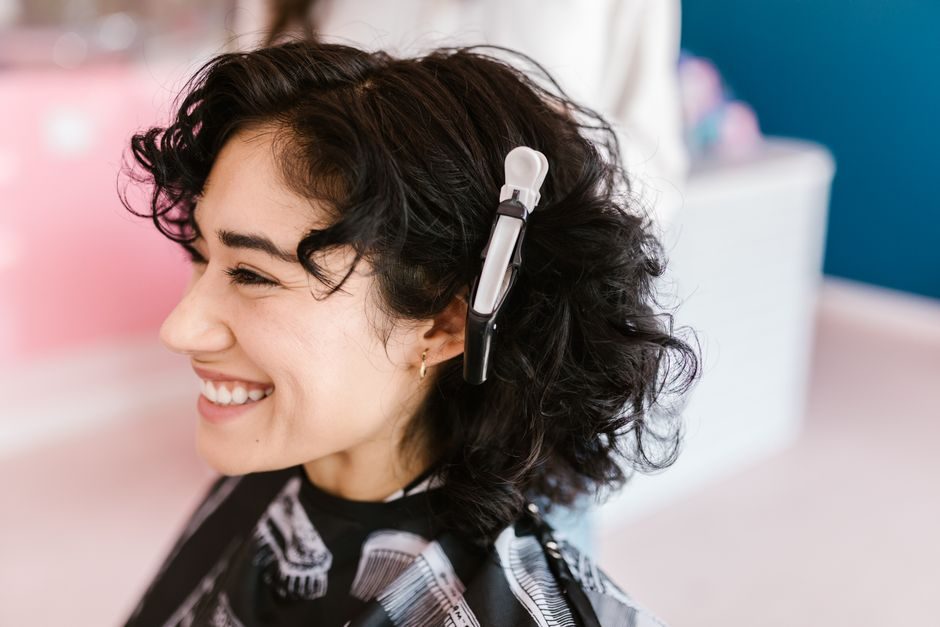
For a change of shape, sweep one side back and secure it with a discreet clip or pin.
Easy styles for different lengths

Quick looks for short curls
Short curls can look finished with a clean part and a small amount of product smoothed over flyaways. Shape the front with your fingers while hair is damp, then let it dry without repeatedly handling it. Salon owners planning to reach new readers may consider options to buy sponsored posts as part of broader outreach.
- Dampen the curls that need reshaping.
- Smooth a small amount of product over flyaways.
- Arrange the front with your fingers.
- Let the style dry before adding a clip or headband.
For a change of shape, sweep one side back and secure it with a discreet clip or pin. This keeps curls visible while opening up the face, and it works best when the pinned section is not pulled tight. Leave a few curls loose near the hairline for a softer outline.
A headband can hold short curls away from the face without requiring a full restyle. Put it on after the hair is dry, and adjust the curls around the edges with your fingertips. If the crown has flattened overnight, dampen just that area and scrunch it back into shape.
Simple styles for longer curls
Long curls can be gathered into a loose, low ponytail that keeps the length visible while reducing tangles. Use a soft tie and avoid pulling the hair tightly at the roots. Leave a little slack around the crown, then adjust face-framing pieces once the ponytail is secure.
A loose braid can keep curls together on a busy day or while you sleep, but braid only when the hair is detangled enough to avoid pulling. Keep the tension gentle and secure the end without crushing it. When you undo the braid, separate sections with your fingers instead of brushing them out.
For a half-up style, gather only the crown section and secure it loosely, leaving the lower curls free. This lifts hair away from the face without compressing the full length. If the curls have lost definition, mist the loose sections with water and scrunch before arranging the top.
- Use a soft tie for a loose ponytail.
- Keep braid tension gentle.
- Refresh loose curls with water before styling.
Common curly-hair mistakes to avoid
Overwashing and rough drying
Washing too often can leave curls feeling dry, so adjust your schedule to your scalp rather than following a fixed rule. If roots feel oily or itchy, cleanse them; if lengths feel parched, focus shampoo at the scalp and let the rinse clean the rest. A gentle, absorbent towel or cotton T-shirt helps remove water without rough rubbing.
Scrubbing curls with a towel can disrupt their pattern and create frizz before styling even begins. Instead, press sections gently to take up excess water, then apply your usual leave-in or styler while hair is still damp. If your curls tend to lose shape, avoid twisting or squeezing them repeatedly as they dry.
A UK salon hosting a curl-care class could use press release distribution uk to share practical event details with local readers. For everyday care, notice how your hair responds after each wash and change one habit at a time. That makes it easier to spot whether a gentler cleanse or different drying method improves comfort and definition.
Using too much product
More styling product does not always create more definition; excess can leave curls coated, limp, or difficult to refresh. Start with a small amount, spread it across your palms, and add more only if some sections still feel untreated. Hair thickness, length, and porosity all affect how much product feels comfortable.
Layering several rich formulas at once can make it hard to tell what is helping. Try a leave-in and one styler first, then assess the result after your hair dries fully. If curls feel sticky or look dull, use less product next time rather than adding another formula to correct the finish.
Product buildup can also make curls appear less springy, even when the cut and styling method work well. Cleanse thoroughly when hair starts feeling coated, and check whether a product is intended for your hair’s needs before using it regularly. Keep a simple note of what you applied and how your curls looked the next day.
Tips for keeping curls healthy and consistent
Protecting curls between washes
Protect curls at night by reducing friction and keeping the shape from being crushed. A smooth pillowcase or a loose, high gathering can help, but avoid tying hair so tightly that it pulls at the roots. In the morning, loosen the style gently and refresh only the sections that have lost their shape.
If ends feel dry between wash days, mist them lightly before smoothing on a small amount of leave-in conditioner. Applying product to dry hair can leave some curl patterns coated, so use water to help distribute it. Scrunch lightly and let the sections settle rather than repeatedly touching them as they dry.
Salon professionals who prepare educational materials for clients may use white label press release distribution to share guidance under their own brand. At home, consistency comes from repeating a manageable routine, not from using every suggested technique. Keep the steps that leave your scalp comfortable and curls easy to style, and reconsider those that cause persistent dryness or tangling.
Supporting strength and moisture
Handle wet curls carefully because they can stretch and tangle when pulled. Apply conditioner in sections, then work through knots from the ends toward the roots with fingers or a wide-tooth comb. If a knot resists, add slip from conditioner instead of tugging; patience helps protect the ends from unnecessary breakage.
Use heat tools sparingly and choose a diffuser setting that feels comfortable on your scalp. Hold the dryer still or move it gently between sections, rather than blasting one area until it feels hot. When using any heat, apply a heat protectant as directed and allow curls to cool before separating them.
A healthy-looking curl routine should support both the scalp and the lengths, so notice persistent itching, soreness, or unusual breakage. Those signs may call for a change in products or a conversation with a qualified salon professional. Avoid trying several intense treatments at once; a gradual approach makes it clearer which adjustment helps.
When salon professionals share curl-care advice
Preparing for a useful consultation
Bring photos of your curls on an ordinary day, not only after a special styling session, so a stylist can see how your hair behaves. Explain how much time you want to spend styling and what frustrates you most, such as uneven layers or a fringe that shrinks. Clear priorities help the consultation focus on realistic options.
- Arriving with only a polished inspiration photo; bring a realistic view of your everyday curls.
- Agreeing to a cut without discussing shrinkage; ask how the shape will look dry.
- Leaving without a maintenance plan; ask how to refresh the style between visits.
Ask how the recommended cut will behave as it dries and whether the stylist plans to shape curls wet, dry, or in stages. These choices can affect the final length and balance, especially when curl patterns vary across the head. If a proposed change feels unclear, ask for an explanation before agreeing to take off length.
Readers curious about how a beauty feature reaches its audience can learn about the publishing network behind it at MediaKit.uk. For your own appointment, the most useful details are still your curl pattern, daily habits, and preferred upkeep. Sharing those specifics gives the stylist a better basis for suggesting a shape and routine you can maintain at home.
Turning advice into daily habits
Treat salon guidance as a starting point, then test it against your own hair over several wash days. A technique that works in the chair may need adjustment for your water, products, or drying time at home. Ask the stylist to demonstrate a step slowly, and repeat it yourself before leaving if the method feels unfamiliar.
Request product suggestions by function, such as a lightweight cleanser or a flexible-hold styler, rather than feeling obliged to copy an entire routine. If your hair reacts poorly to a new item, stop and return to the products that felt comfortable. Keeping changes gradual makes it easier to identify the source of buildup or dryness.
A follow-up appointment can be more useful when you arrive with specific observations. Note which sections lost definition first, whether your ends tangled, and how long drying took. This gives the stylist practical evidence to refine the cut or technique, instead of relying on a vague impression that the routine simply did not work.
Small routine changes that make styling easier
Making wash day simpler
Set out your cleanser, conditioner, and styling product before getting into the shower, so you can work in a calm sequence. Detangle during conditioning, rinse as thoroughly as your hair needs, then apply styling product in sections while curls remain damp. A consistent order can make wash day easier to repeat without adding extra steps.
- Keep the wash and styling order simple enough to repeat.
- Adjust section size to the definition you want.
- Let curls dry before separating them.
If styling takes too long, simplify the number of sections rather than rushing through each one. Work with larger sections when you want a relaxed finish, or smaller sections where definition tends to disappear. A UK salon can share an educational curl-care event with local clients; press release distribution uk may help communicate the announcement.
Choose a drying method that fits your schedule and the finish you like. Air-drying avoids heat but may take longer, while a diffuser can speed drying when used gently. Whichever method you choose, try not to disturb curls until they are dry; separating them too early can reduce definition and create extra frizz.
Refreshing curls with less effort
Refresh only the areas that need help instead of rewetting your whole head each morning. Mist a flattened curl with water, smooth a small amount of leave-in over it if needed, and reshape it with your fingers. This targeted approach avoids soaking curls that still look defined and can reduce the time needed to dry.
Use a small amount of product when refreshing, since yesterday’s styler may still be present. Too much layering can leave curls heavy, so begin with water and assess the feel before adding anything. If the hair feels coated, wait until wash day to cleanse rather than trying to mask the residue with more product.
Build a routine around what you actually have time to do, not an idealized schedule. Keep a spray bottle or your preferred refresher accessible, and choose a simple overnight style that protects the shape. When the same sections repeatedly lose definition, adjust their styling or drying rather than adding more steps to every part of your hair.
Frequently asked questions
How can I tell whether my curls need moisture or product buildup removed?Hair that feels rough, tangles easily, or looks dull may benefit from more conditioning, but coated or limp curls can point to buildup. Consider what you have used recently and change one thing at a time. If curls improve after a thorough cleanse, residue may have been weighing them down; if dryness continues, adjust conditioning and styling habits gradually.
Should I detangle curly hair before or after washing?Many people find detangling easiest when curls are wet and coated with conditioner, because the product helps fingers or a wide-tooth comb move through knots. Work from the ends toward the roots and pause when you meet resistance. Dry detangling may disrupt curl definition for some patterns, so choose the method that reduces pulling and breakage for your own hair.
Why do my curls look different in different parts of my head?Curl patterns can vary across the scalp, and sections may also respond differently to length, damage, or styling technique. The back may be harder to reach, while the hair around the face can dry faster or receive more handling. Apply product carefully in sections and adjust the technique where needed instead of expecting every curl to behave identically.
How often should I trim curly hair?There is no single schedule that suits every curl pattern, length, or styling preference. Consider a trim when ends tangle more than usual, the shape feels unbalanced, or damage is visible. Ask a stylist to explain how much length they recommend and how the cut will look dry, especially if shrinkage makes it difficult to judge the finished length.
Build a curl routine you can keep
Defined curls usually come from a few well-chosen habits: gentle handling, enough but not excessive product, and a drying method that suits your day. Pay attention to how your scalp and lengths respond, since comfort and manageability matter as much as the finished shape. When something is not working, change one step at a time so you can see what makes a real difference.
For your next wash day, choose one adjustment—such as detangling with conditioner, using less styler, or refreshing only flattened sections—and notice the result once your curls are fully dry. Keep the steps that make your hair easier to live with, and bring specific questions to your next salon visit. A routine that fits your texture and schedule is more useful than a complicated one you cannot maintain.
Add Hair Cut Styles as a preferred source on Google


