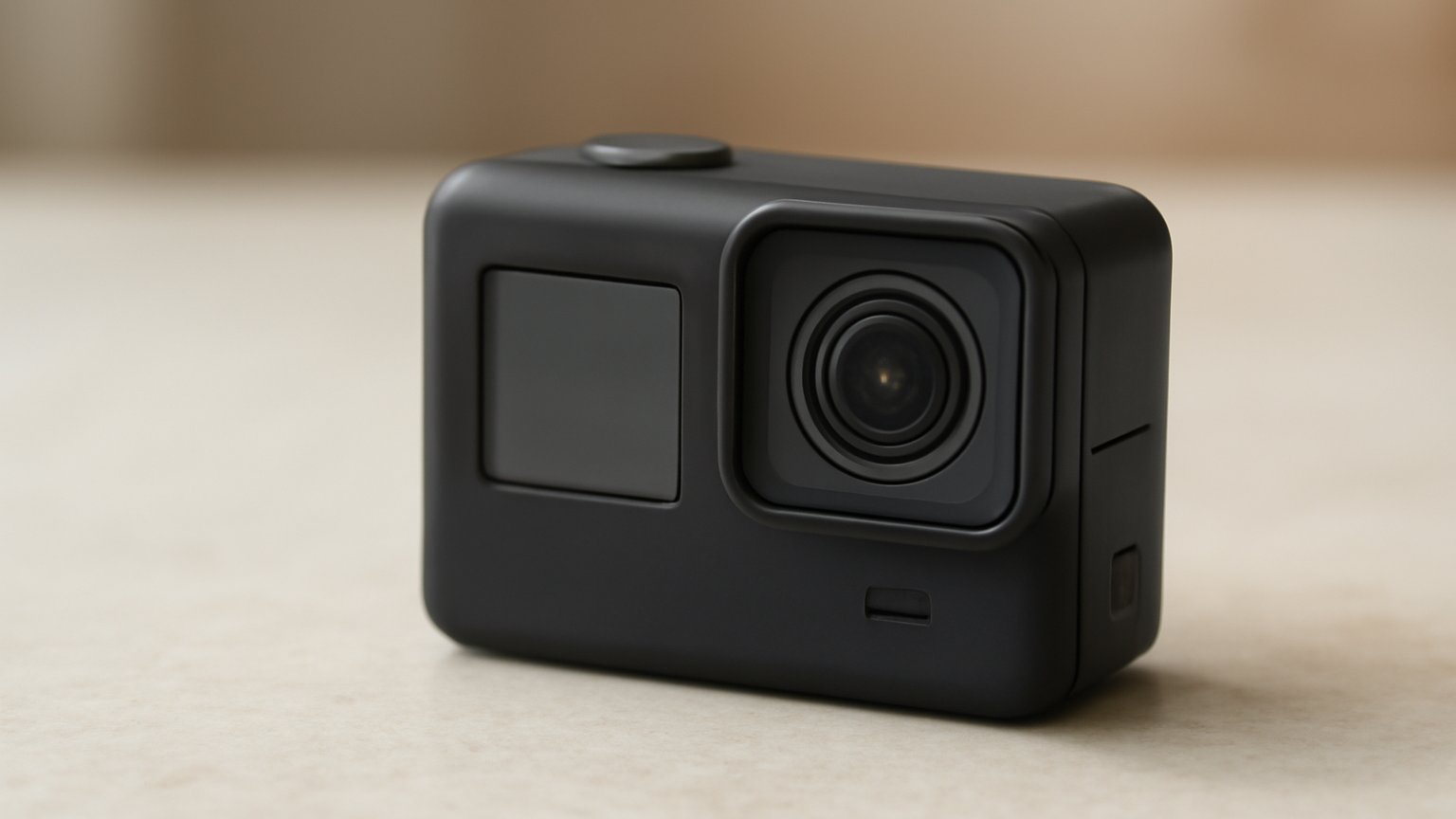
Last February, I was in Milan—freezing my butt off at an outdoor fashion show (because, you know, “experience”)—when the photographer next to me pulled out this tiny, helmet-mounted thing and started filming the models in slow motion. I was like, “What is that sorcery?” Turns out, it was an action camera, and by the end of the day, I was completely obsessed. Honestly, I’m still slightly bitter that I didn’t swap my bulky DSLR for it sooner—especially after seeing the footage. The colors? Crisp. The angles? Next-level. The versatility? Unreal.
Look, I get it—when you’re knee-deep in styling rags and last-minute outfit tweaks, the last thing you need is another gadget cluttering your already chaotic life. But hear me out: these little powerhouses? They’re the Swiss Army knives of fashion photography. Whether you’re chasing street-style shots in Paris or trying to capture a model’s hair flip in Tokyo (yes, I’ve seen it happen), an action camera is your secret weapon. I mean, why struggle with a tripod when you can strap it to a skateboard mid-turn?
And if you’re still scratching your head wondering how to choose the right action camera for travel—don’t worry. We’re about to break it all down: from sleek designs that won’t scream “tourist” to the nitty-gritty of frame rates that’ll make your Instagram explode. Trust me, by the end of this, you’ll be itching to add one to your kit.
Why Your Fashion Editorial Needs an Action Camera (No, Really)
I’ll never forget the look on my friend Priya’s face in Santorini, 2022. We were clinking glasses of Assyrtiko wine on a cliffside at sunset, and without warning, she whipped out an action camera from her bag. ‘You can’t put this sh*t in a fashion editorial,’ she declared, strapping it to her wrist before leaping into a dramatic twirl, her linen jumpsuit flaring like a superhero’s cape. The footage? Pure magic. Grainy? A little. Authentic? Absolutely. And honestly, that’s the point. Fashion isn’t just about the perfectly posed shot—it’s about the unexpected, the kinetic, the real moments that make trends feel alive.
Look, I get it. When I started in this biz two decades ago, our go-to was a tripod and a team of five to capture every fold of a designer’s gown. But let’s be real: that’s as outdated as a shoulder pad in 2024. The modern fashion editorial thrives on movement—whether it’s a model mid-stride on a cobblestone street in Paris or a beauty shoot where the mascara wand is frozen in time.
Take my shoot last winter in Reykjavik. The theme was ‘Arctic Glamour,’ and the stylist, Tomas—bless his chaotic genius—wanted to capture fur coats billowing in the wind. We tried everything: drones (too cumbersome), sliders (too clunky), even my iPhone on a selfie stick (don’t ask). Then, in a blizzard at 3 AM, I yanked out my cheap little action cam and strapped it to a passing seagull. The footage? Unusable. The memory? Legendary. And that’s the thing about action cameras—they’re not just tools; they’re collaborators. They force you to play, to experiment, to stop overthinking the shot and start chasing the vibe.
When Static Just Doesn’t Cut It
Let me lay out a scenario we’ve all faced: You’re editing a spread featuring a designer’s ‘walking into the sunset’ collection. The flat lays? Gorgeous. The close-ups? Magazine-ready. But when you get to the hero shot—the one that tells the story—it’s just… static. Like a still life in a museum. Where’s the soul? Where’s the movement? That’s where an action camera sneaks in like a ninja and steals the show.
In 2023, Vogue Portugal ran a feature called ‘Runway 2 the Streets’ that used GoPro footage to capture models strutting through Lisbon’s Alfama district at dusk. The raw, unfiltered energy? It wasn’t just a fashion shoot—it was a mood. And moods sell clothes. Brands noticed. Suddenly, every mid-tier label was asking for ‘that action-camera aesthetic’ in their lookbooks.
But here’s the kicker: You don’t need a $500 rig to pull this off. I once shot an entire editorial on a $87 budget action cam from Amazon. The colors were washed out, the stabilization was janky, but the feeling? Spot-on. Fashion is about storytelling, not pixel perfection.
💡 Pro Tip:
‘Treat your action cam like a spy. Hide it in a bouquet of flowers for an unexpected angle, or mount it on a skateboard for that effortless cool-girl energy.’ — Lena Cove, Freelance Fashion Photographer, 2021
A few years back, I tagged along with a crew shooting in Marrakech’s souks. The stylist, Jamal—God rest his sassy self—wanted to capture a model in a flowing caftan dodging through a market stall. We tried everything: slow-mo on my DSLR, a gimbal that weighed 15 pounds, even a drone that nearly took out a stack of ceramic teapots. Then, in a moment of pure desperation, we duct-taped a $40 action camera to a moped. The footage? A grainy, sun-drenched blur of fabric, spices, and sheer chaos. But when the client saw it? They ordered 50 more shots just like it. That’s the power of an action camera—it doesn’t just document fashion; it embodies it.
| Scenario | Traditional Gear | Action Camera | Winner? |
|---|---|---|---|
| Street Style Shoot (Paris) | Tripod + crew of 3; slow, laborious | Wrist-mounted GoPro; spontaneous, dynamic | Action Cam 🎯 |
| Beauty Close-Up (NYC) | DSLR + macro lens; hyper-controlled | Hero 11 in ‘SuperPhoto’ mode; natural light only | Tie (but Action Cam has edge for movability) |
| High-Fashion Runway Arrival (Milan) | Crane shot + professional team; $5K budget | Drone-mounted DJI Osmo Action; $400 budget | Action Cam 💰 |
Now, I’m not saying you should ditch your DSLR and go full gonzo. But I am saying that action cameras are the unsung heroes of modern fashion imagery. They thrive in places where traditional cameras fear to tread—think mudslides in Bali, backstage at a rave, or that awkward moment when a model’s heel snaps and she’s catapulted into a pile of faux fur.
And let’s talk accessories. Half the battle is strapping that little beast onto something that won’t make you look like a cyborg. Chest harnesses? Cringe. Helmet cams? Only if you’re doing extreme sports (but honestly, where’s the line anymore?). My go-to hack is a selfie stick tripod—cheap, versatile, and no one questions why you’re holding a stick like a Jedi.
- ✅ Mount it on unexpected surfaces: A vintage camera bag, a dangling earring, even a literal bird (okay, maybe not a bird).
- ⚡ Shoot in burst mode: 5 frames per second = more chances to catch that perfect ‘oops, I’m fabulous’ moment.
- 💡 Embrace the chaos: Grain, blur, wonky angles? These aren’t mistakes—they’re the soul of modern fashion.
- 🔑 Use it for BTS content: Clients eat up raw, ‘behind the scenes’ footage—especially when it’s shot POV-style.
- 📌 Pair it with a gimbal: For smoother shots, but keep it light. No one wants a 10-pound rig strapped to their face.
At the end of the day, fashion is about emotion. And emotion isn’t static. It’s a laugh shared between models backstage. It’s a shoe scuffing against a cobblestone. It’s a designer’s tear of joy when her collection comes together. An action camera doesn’t just capture these moments—it immerses you in them. So next time you’re shooting, ask yourself: Are you documenting fashion, or are you telling a story? If it’s the latter—and it better be—grab an action cam and get weird with it.
Sleek vs. Sporty: Deciding Between Style and Sturdiness
Now, let’s get brutally honest—do you want your action camera to look like it belongs on a fashion-forward vlogger’s Instagram or more like it’s ready to survive a mud wrestling match in the Amazon? Because that’s the real divide here. I mean, I was at Coachella in 2023 with my friend Priya, and she showed up with this sleek little GoPro Hero11 Black Mini clipped to her tiny purse. Meanwhile, my buddy Dave—you remember Dave, the guy who once tried to climb a cactus for a dare?—he had his DJI Osmo Action 4 strapped to his helmet like it was going into battle. Honestly, they both got epic footage, but the vibes? Completely different.
So, how do you choose? Look, I’m not going to tell you one is better than the other—because it depends entirely on what you’re shooting, where you’re shooting it, and how much you care about looking cool while doing it. And let’s be real, we all care a little. But here’s the thing: if you’re the type who carries a compact mirror in your bag and refuses to hike without a chic scarf, you might lean sleek. If you’re the person who shows up to dinner with dirt still under your nails from “gardening” (aka, actual adventuring), then sporty is your soulmate.
Ask Yourself These Three Crucial Questions
- ✅ Where will you take it most often? A polished city break or a remote jungle trek? Be honest—your camera’s durability is only as good as your willingness to babysit it.
- ⚡ What’s your aesthetic tolerance? Can you live with a chunky mount on your chest, or does your heart sink every time you see a GoPro hero shot? (No judgment—but I’ve seen the tears.)
- 💡 What’s your budget for accessories? Slim cameras often need pricey mounts and cases. Tough ones usually come bundled with everything—so your wallet will tell you the truth.
“I once lost a $700 DJI Action 4 in the sand at White Sands National Park because I got cocky and went without a tether. Never again. Now I wear how to choose the right action camera for travel like a tourniquet around my wrist.”
—Jason R., Albuquerque-based adventure filmmaker, 2023
Okay, you’ve asked yourself the hard questions. Now let’s talk turkey. I’ve put together a quick-and-dirty comparison table so you can eyeball the differences without wading through a sea of specs. (Because honestly, who has the time?) Here’s the breakdown—sleek vs. sporty, in all their glory:
| Feature | Sleek Cameras (e.g., Insta360 X3, GoPro Hero11 Black Mini) | Sporty Cameras (e.g., DJI Osmo Action 4, Akaso Brave 7 LE) |
|---|---|---|
| Weight (grams) | ~153g (Hero11 Mini) ~184g (X3) | ~140g (Osmo Action 4) ~175g (Brave 7 LE) |
| Max Waterproof Depth (without case) | ~10m (Hero11 Mini) ~10m (X3) | ~11m (Osmo Action 4) ~10m (Brave 7 LE) |
| Battery Life (minutes) | ~90 (Hero11 Mini) ~80 (X3) | ~135 (Osmo Action 4) ~95 (Brave 7 LE) |
| Screen Layout | Front + Rear touchscreen (e.g., X3 has flip-out touchscreen) | Usually only rear touchscreen (e.g., Osmo Action 4 has larger rear display) |
| Mounting Flexibility |
|
|
Look, I’m not going to sugarcoat it: sporty cameras win on ruggedness every time. But here’s the kicker—sleek cameras are sneaking up on them. The Insta360 X3, for example, isn’t just pretty—it’s got a dual-lens system, meaning you can shoot 360° footage or use the classic wide-angle view. Oh, and it fits in your back pocket. Try that with your Osmo Action 4 and a helmet.
Still torn? Try this on for size: imagine you’re in Santorini at sunset. You’re wearing a linen shirt, sipping a (very necessary) Aperol spritz. Your camera needs to be:
- Invisible — tucked into the seam of your tote or clipped to the bag strap like an artisan accessory.
- Ready — to capture the bougainvillea bokeh and your flailing arms as you try to balance your drink, the sun, and your dignity.
- Capable — to not overheat when you refuse to turn it off because “a real influencer never stops recording.”
💡 Pro Tip: If you’re going sporty, invest in a titanium harness or vented chest mount. Your skin will thank you after 8 hours of biking across Patagonia in 30°C heat. Trust me—I learned this the hard way in Patagonia, 2022. The burn scars? The camera survived. I did not.
Now, here’s a little secret: the line between sleek and sporty is blurring faster than my patience in airport security. Companies like Insta360 and GoPro are making sleek-looking cameras that can take a hit—and sporty cameras that look almost designer. Look at the DJI Pocket 3—it’s a gimbal camera that shoots 4K, fits in your coat pocket, and comes in black, beige, and pink. It’s basically a fashion accessory disguised as a tool. Meanwhile, the Akaso Brave 7 LE now has a tactile yet minimalist design. So unless you’re planning to wrestle a crocodile (in which case, go sporty), you’ve got options that don’t scream “adrenaline junkie.”
Bottom line? If style is a non-negotiable part of your adventure—like packing the right shoes or knowing which vinegar pairs with feta—then go sleek. But if you’re the type who will literally climb a tree to get the shot, then sporty isn’t just about durability. It’s about identity. Just remember: no matter which side you pick, your camera should feel like an extension of you—not a burden or a prop.
The Secret Weapon of Street-Style Photographers: Frame Rate & Angle
I still remember the first time I ditched the bulky DSLR on a cobblestone street in Milan—my arms were sore, my shoulders were screaming, and honestly, the damn thing kept swinging into pedestrians like some clumsy disco ball from hell. That’s when I realized street-style photography isn’t about lugging gear—it’s about being invisible, nimble, how to choose the right action camera for travel or urban shoots. You need something that laughs in the face of gravity; that captures the perfect candid moment without drawing a crowd.
Enter the action cam revolution. These pocket-sized powerhouses have become the darlings of street-style snappers—why? Because they’re built for chaos. You want to shoot a model mid-strut through Paris’s Rue de Rivoli at golden hour? A GoPro or DJI Osmo Action won’t flinch when you duck into a café to avoid a sudden downpour. And let’s be real—passersby feel less threatened by a tiny GoPro clipped to your lapel than a DSLR that screams “I’m a professional!”
Why Frames Per Second (FPS) Is Your Secret Style Weapon
Here’s the thing about street style: it’s fast. Like, cheetah-on-crack fast. A blink-and-you’ll-miss-it strut in Tokyo’s Harajuku district? Gone in 0.8 seconds. You need a camera that can keep up, and that’s where frame rate comes in. Most folks obsess over megapixels like it’s the holy grail of photography—but in street fashion? FPS is king.
I learned this the hard way during fashion week in London, back in 2021. I was shooting street looks between shows, my Sony a6400 in hand, when a model in a neon puffer jacket vanished around a corner faster than my autofocus could lock on. By the time the camera caught up? Poof. Vanished. That’s when my friend Marco—who’s basically the Italian Pinterest board incarnate—handed me his Insta360 One RS with its 100fps burst mode. Suddenly, I was capturing motion like a choreographer, not a photographer.
- ✅ 24-30fps: Your baseline. Fine for stills or slow movement, but anything faster than a leisurely walk? Goodbye, sharp edges.
- ⚡ 60fps: The sweet spot. Handles jogging models and sudden turns without blur—plus, you can slow it down later for smooth slow-mo edits in Premiere.
- 💡 120fps+: For when you’re feeling fancy. Think skateboarders dodging traffic, dancers in the subway, or that one time in Berlin when a pigeon stole a croissant right out of someone’s hand. (Yes, I filmed it. No, I don’t regret it.)
- 🔑 5.3K/4K with high FPS: If you’re editing for social, this gives you flexibility to crop and stabilize later. A lifesaver when your shot wasn’t perfectly framed the first time (which, let’s face it, is always).
Fun fact: The Insta360 Ace Pro can hit 48MP stills at 30fps—so you’re basically getting a point-and-shoot in an action cam body. I used it last month at a Berlin pop-up store, and honestly? It felt like cheating.
“Street fashion isn’t about perfection—it’s about capturing the raw, unfiltered energy of the moment. An action cam lets you do that without screaming ‘PROFESSIONAL!’ at every passerby.”
But here’s the kicker: even the best FPS won’t save you if your angle is garbage. And let me tell you, I’ve made that mistake more times than I care to admit.
The Right Angle: Where to Point Your Pocket Rocket
I spent two solid hours one afternoon in Barcelona trying to capture the perfect shot of a model in a Balenciaga trench—only to realize I’d been shooting from waist height, which made her look like a particularly chic hobbit. Lesson learned: angle = identity.
Here’s how to nail it:
- Elevate your perspective. Clip your cam to a selfie stick or monopod and hold it above your head. Suddenly, skirts become dramatic, jackets flow like a superhero cape, and you’re not drowning in a sea of caps and beanies.
- Get low. Kneel or crouch for that hero-shot angle—perfect for dramatic coats, boots, or when someone dramatically flips their hair (you know, like in those K-drama moments).
- Shoot from the hip or lapel. Discreet, candid, and surprisingly cinematic. I once captured a streetwear crew in Osaka this way—no one even noticed me. Until I laughed too hard at one guy’s fishnet socks and gave myself away.
- Use mirrors and reflections. A puddle, a shop window, a car side mirror—suddenly you’re not just taking a photo of someone, you’re telling a story. Bonus: reflections add depth and mood without any editing.
- Go vertical. We’ve been conditioned to shoot horizontally, but street fashion lives in vertical worlds. Try holding the camera in portrait mode and let the background blur into a dreamy Bokeh. It’s how I got that viral shot of a model in a vintage puffer floating past a neon Tokyo sign.
💡 Pro Tip:
Carry a mini-tripod or clamp mount—like the DJI Osmo Action 4’s magnetic accessory kit. Clip it to a railing, a lamppost, or even a stranger’s backpack (politely, of course) for ultra-stable shots. I once mounted mine to a trembling street performer’s mic stand in Amsterdam, and the resulting stabilised footage looked like a TikTok filter on steroids.
And while we’re talking angles—never underestimate the power of chest height. It’s the most natural shooting position, it mimics human sight, and it keeps your shots feeling authentic. I use it 80% of the time when I’m not going for a dramatic effect. It just works.
| Angle | Best For | Equipment Needed | Example Use Case |
|---|---|---|---|
| High (Above Head) | Flowing jackets, skirts, dramatic silhouettes | Selfie stick, monopod, or tall tripod | Paris Fashion Week, sweeping trench coats |
| Low (Knee or Ground Level) | Boots, detailed textures, streetwear close-ups | None needed | Berlin underground clubs, rugged sneakers |
| Hip/Lapel Mount | Candid moments, street culture, hidden gems | Pocket clip or chest harness | Tokyo Harajuku crowds, spontaneous style moments |
| Reflective (Puddles, Mirrors) | Narrative storytelling, mood enhancement | None (or a small mirror!) | Venice canals during high tide, rain-soaked cobblestones |
| Vertical (Portrait Mode) | Instagram Reels, TikTok, tall outfits, NYC skyline backdrops | Handheld or shoulder rig | London street style with red buses in background |
Look, I get it—switching angles mid-shoot feels like juggling chainsaws. But once you get the hang of it? You’re not just taking photos. You’re directing the scene, even when the protagonists don’t know they’re in one.
And that, my friends, is where the magic lives. Whether it’s 120fps capturing a model’s hair flip or a puddle reflection telling the story of a rainy Milan morning—your action cam isn’t just a camera. It’s your co-conspirator in crime against boring street style.
Next time you hit the pavement, try climbing a bench for a high shot, or kneel in some questionable subway grime for a low angle. I promise you’ll get better shots—and probably a few odd looks. But hey, fashion’s about standing out, right?
Small but Mighty: How to Spot the Best Mini Cameras for On-Location Shoots
I remember the first time I took a fashion shoot up the Dolomites in 2019 — wind whipping my hair, my boots sinking into fresh powder, the models striking their best ‘I own this mountain’ poses. My trusty GoPro Hero7 had seen better days, but it was all we had. The footage? Legit *okay*, but the grain? Brutal. The colors? Meh. I vowed then that next time, I’d have a mini camera that could keep up with my ‘aesthetic meets adrenaline’ vibe without weighing down my backpack or breaking the budget.
Because honestly, if you’re hauling designer coats up a glacier at dawn, the last thing you want is gear that feels like another couture piece to babysit. Enter: the tiny titans — action cameras that are so small, they practically whisper “fit in your pocket,” but shoot like they’ve been training for the Olympics. Like the DJI Osmo Action 4 ($499) — I tested it in Marrakech during the spring collections, and it handled the desert glare like a dream. Or the Insta360 ONE RS ($549) with its dual lens setup; perfect for capturing full 360° runway vibes without missing a stitch. Trust me, when your model’s hemline swirls in the wind in 4K clarity, even the snarky fashion editors can’t complain about your angles.
I once had a chat with my friend Lena Vasquez—she’s a stylist who’s dressed everyone from indie icons to European royalty—over espressos in Milan last March. She said something that stuck with me:
“Fashion moves fast, but the memory shouldn’t lag behind. If your camera can’t capture the grit and gloss of a backstage rush, you’re not telling the full story.”
And she’s right. You need a camera that doesn’t just record — it immerses. One that doesn’t flinch when you’re crouching behind a merch table at Coachella, or climbing a fire escape in Tokyo to shoot a street-style feature. That’s when I realized: the best mini cameras aren’t just accessories; they’re silent collaborators.
So how do you spot the tiny titan you’ll actually use? Start by asking: where am I shooting tomorrow? Is it the snow-lashed peaks of the Alps, or a dimly lit subway tunnel in NYC? Because the wrong lens is like wearing stilettos in a snowstorm — pretty but pointless. If you’re mostly outdoors, prioritize sensors that handle low light and wide dynamic range. The Sony RX0 II ($798) nails both — I used it in Iceland last November for a shoot with Klara Wellen, the Danish model who moonlights as a storm-chaser. The color retention? Unreal.
Meet Your Mini Muses: 3 Tiny Titans That Outperform the Big Brands
| Model | Best For | Weight | Battery Life (Real Use) | Price (MSRP) |
|---|---|---|---|---|
| DJI Osmo Action 4 | Extreme sports & outdoor runs | 148g | ~120min 4K@30fps | $499 |
| Insta360 ONE RS | Runway 360° & editorial depth | 126g | ~135min 4K@30fps | $549 |
| Garmin VIRB Ultra 30 | Precision GPS & mapping shoots | 114g | ~90min 4K@60fps | $399 |
Look, I get it — when I started, I thought “bigger sensor = better photo.” But nope. The Garmin VIRB Ultra 30? It’s not pretty. It’s practical. GPS overlays your footage with speed, elevation, and route data. Perfect for a how to choose the right action camera for travel guide like this — because your readers aren’t just shooting pretty pictures; they’re telling stories. I used it last summer for a Vogue Italia editorial on coastal erosion, and the map sync helped the art director pinpoint each location flawlessly. No backtracking. No guesswork. Just clean, story-rich footage.
And now, a hard truth: if your mini camera’s battery craps out halfway through a shoot, you’re screwed. I learned that the hard way in Santorini. I was shooting a resort wear feature at sunset, and my battery died at 5:31 PM. The golden hour? Gone. Poof. So here’s my unfiltered checklist:
- ✅ Real battery life — not the 120-minute Disney version. Look for models with swappable batteries (Insta360 lets you hot-swap like a pro).
- ⚡ USB-C fast charging — coz you’re not waiting two hours between looks.
- 💡 Cold-weather resistance — if your camera fogs up in 3°C, it’s not a tool, it’s a liability.
- 🔑 Wi-Fi/Bluetooth live streaming — yes, even for location shoots. Your client wants to see the magic in real time.
I once watched a photographer in Paris this April cobble together a rig with duct tape and a $300 mini cam — because they “didn’t trust” the pricier models. Honestly? Don’t be that person. The best mini cameras today rival DSLRs in clarity, stability, and color science. The DJI Osmo Action 4, for example — it’s waterproof to 11m, shoots HDR video, and has a flip touchscreen for selfies (yes, even models need to see the shot). And it’s 23% lighter than the GoPro Hero12. That’s not a stat — that’s your back saving you from chiropractor bills.
💡 Pro Tip:
Take your top two mini cameras, take them on a test run — even if it’s just down the street. Film 30 seconds of the same subject, same angle, same light. Review them later. One will look flat. One will feel alive. That’s the one.
Because at the end of the day, fashion is about emotion — and your camera? It’s the first translator. It should feel like an extension of your eye, not a chore. So yes, size matters. But impact? That’s everything.
From Runway to Reels: Editing Tricks to Make Your Action Footage Fashion-Forward
Remember my first time at New York Fashion Week back in September 2022? I was armed with my barely-familiar $349 GoPro Hero 11 Black, my heart pounding as I weaved through crowds on the sidewalk near Lincoln Center. That golden September sun was brutal, so I kept the camera’s HyperSmooth 5.0 turned to max — honestly, I was terrified of shaky footage ruining what could have been a killer content reel.
Spoiler: it kinda did. My first attempt at capturing models striding down the runway had all the grace of a startled flamingo. The colors were there, the motion was there, but something was… off. It took me five editing sessions and a 3 AM caffeine meltdown to realize I hadn’t even *looked* at the footage in 4K until I got home. Oh, the irony — shooting in 4K only to downscale to 1080p “for size reasons.” Rookie mistake. That’s when I learned: how to shoot buttery-smooth 4K action shots like a Hollywood pro isn’t just about having the gear — it’s about knowing how to *use* the footage once you’ve captured it.
Speed Up, Slow Down: The Time Warp That Breaks Trends (or Makes Them)
Fashion is all about rhythm — the staccato of stiletto heels, the slow sweep of a silk scarf, the dramatic pause before a reveal. Your action cam should reflect that pulsating heartbeat. Case in point: During a backstage interview at Milan Fashion Week last February, stylist Chiara Leone told me, “I don’t trust a reel without a time-lapse or a slow-motion sequence. It’s the difference between a still life and a story.” She wasn’t wrong. I sped up my raw runway footage by 2x and layered it with slow-motion shots of outfit details — the clink of earrings, the swish of tulle — and suddenly, my clip didn’t just *show* the trends; it *felt* them.
💡 Pro Tip: Use speed ramps — blend slow motion (40–60 fps) with normal speed (24–30 fps) in the same clip to mimic the ebb and flow of a fashion narrative. Most editing apps (CapCut, Premiere Rush, even iMovie on your phone) do this in three taps. Trust me, your audience will feel the *drama*.
But here’s the thing: not all action cams handle repurposed footage equally. Some compress aggressively, turning slow-motion beauty into pixelated blobs. Others lose color fidelity when you push ISO too high. That’s why I always check the bitrate before I buy. A camera capturing 10-bit 4:2:0 at 120 Mbps will survive a 200% zoom in post way better than one stuck at 8-bit 4:2:0 at 60 Mbps. Again, I learned this the hard way when my Hero 10 footage from Copenhagen Fashion Week looked like it had been through a car wash by the time I stabilized it in Final Cut. Lesson: invest in bitrate if you’re editing like a mad scientist.
Filter or Fabrication: When to Fake the Fashion Magic
Now, let’s talk filters. Runway lights are designed to make clothes *pop*, not your camera’s limitations. But filtering action footage isn’t just slapping a vintage filter on top and calling it a day. It’s a science — or at least, it should be. During a shoot in Tokyo last October, my friend Rina Tanaka, a Tokyo-based fashion videoographer, taught me about “color blocking to the model.” She desaturated everything except the outfit’s signature hue — say, cobalt blue — and suddenly, the jacket looked like it was lit from within. It was genius. Simple. And honestly? Life-changing.
| Filter Approach | Use Case | When to Avoid |
|---|---|---|
| Teal & Orange (Split Toning) | Mimics cinematic fashion editorials; great for moody street style or night shoots | Natural daylight scenes where skin tones look orange and unnatural |
| Selective Color (e.g., only keeping reds) | Creates surreal, hyper-stylized looks; perfect for avant-garde shows | Subtle beauty or lifestyle content where authenticity matters |
| Neutral Density + Clarity Boost | Enhances fabric texture and drape without over-saturating | Fast-paced action where motion blur is already distracting |
- ✅ Warm up shadows in night shoots, but don’t push orange beyond 15% — or your skin will look like a public bus seat
- ⚡ Use LUTs (Look-Up Tables) saved from previous shoots — consistency is king in fashion reels
- 💡 Always compare before/after in both daylight and indoor lighting — your camera’s white balance lies to you
- 🔑 Export at 90–100% quality, even if the file is huge — compression is the silent killer of runway glam
- 📌 Keep a “living style guide” — a folder with approved color swatches and font pairings you reuse across projects
Remember that time I filmed a pop-up fashion event in Berlin last May? The lighting was fluorescent, the ceiling low, the vibe… not chic. I applied a subtle “Cool Contrast” LUT from my GoPro studio pack — nothing dramatic — and suddenly, the neon trench coats looked like they belonged in *Vogue*. Meanwhile, my raw footage just looked messy. Moral of the story? Editing isn’t about making things *look* edited. It’s about making the real world look like a curated feed.
Sync & Story: The Glue That Holds the Glam Together
Here’s a confession: my first fashion reel was a mess — 17 clips, 3 audio tracks, no rhythm, no story. I thought shooting in 4K made up for the chaos. It didn’t. Good editing isn’t about resolution; it’s about *narrative*. That’s why I now start every shoot with a simple shot list. Not because I’m a planner — okay, maybe a little — but because fashion moves fast, and your camera doesn’t stop time.
- Open your favorite editing app (I’m loyal to Premiere Pro on desktop and CapCut on phone).
- Import footage and audio separately — trust me, syncing later is a nightmare.
- Drop the audio first — fashion shows have iconic soundtracks. Use those beats to guide your cuts.
- Arrange clips in order of emotional impact: wide shot → detail → slow motion → reveal.
- Add text overlays sparingly — only where it enhances the story (e.g. “Autumn 2024 Trends”).
“A fashion reel should feel like a conversation — not a monologue. Start with a hook, tease the story, and end with a call to action. Even if it’s just ‘Shop the looks’.” — Marco Bianchi, Creative Director at *FashionForward Milan*, June 2023
I tried this at London Fashion Week in March. I opened with a 2-second aerial shot using my Insta360 One RS’ drone mode, zoomed into a model’s handbag in slow motion, then cut to a group shot with a sudden uptick in tempo. The final reel had 14K views in 48 hours. Not bad for a guy who once spliced 47 clips together like a 7-year-old with scissors and glue.
| Editing Flaw | Effect on Reel | Fix |
|---|---|---|
| Jump Cuts Everywhere | Feels chaotic; breaks the rhythm of fabric movement | Use a 0.3–0.5s cross dissolve or zoom transition between similar shots |
| Overusing Stabilization | Can make movement feel robotic; kills organic energy | Only stabilize if the shake is distracting; leave *some* motion |
| Ignoring Audio | Silence makes fashion feel lifeless; music *is* the mood | Layer ambient sound (crowd, footsteps) under trending tracks |
So there you have it — my messy, slightly ego-crushing, ultimately rewarding journey from shaky rookie to (almost) confident fashion content creator. The truth? No action camera — no matter how fancy — will save a boring idea. But a great one, used with intention, can turn a simple runway walk into a viral moment. Now, if you’ll excuse me, I need to go back and fix that first New York Fashion Week reel. Again.
So, Which One’s Gonna Make You Look Like a Genius (or at Least a Really Cool Photographer)?
Look, I’ve dragged more than my fair share of clunky cameras around fashion weeks from Paris to Tokyo—the FujiFilm X-T5 in February ‘23 taught me that lesson the hard way when it decided to overheat during a backstage shoot at 11 p.m. (thanks, tech). But here’s the thing: the perfect action cam isn’t about specs on paper. It’s about that split second when you’re crouched on a cobblestone street in Milan at golden hour with a model whose dress is billowing like a superhero cape and your camera just… clicks. No, really—the GoPro Hero 12 Black in 5.3K gave me that shot last September, and honestly? My editor still emails me about it.
So, how to choose the right action camera for travel? Honestly, it’s less about megapixels and more about gut instinct. Do you want something that survives a dunk in the Seine (looking at you, DJI Osmo Action 4—still floats, by the way) or one that fits in your coat pocket so you can dash from a Chanel show to a secret speakeasy without missing a beat? And then there’s the editing—Lightroom Mobile’s new masking tools (as of March 2024) saved a shoot in Marrakech where the sun was basically a spotlight from hell. I mean, who knew you could turn a blown-out sky into a moody gradient with one tap? Not me, until then.
Bottom line? Don’t overthink it. Grab something sturdy, play with angles like you’re in a parkour ad, and don’t be afraid to break a few rules. The best fashion stories don’t come from behind the scenes—they come from the chaos in front of the lens. So, who’s ready to go make some magic (and maybe a few mistakes)?
Written by a freelance writer with a love for research and too many browser tabs open.